
- Why a CRM is central to a crowdfunding campaign
- How to structure a CRM for crowdfunding
- Lead management in crowdfunding: how to organize contacts
- Follow-up: how to build a process that leads to investment
- Lead scoring for crowdfunding: how to figure out who is ready to invest
- CRM software for crowdfunding: concrete tools and how to use them
- Want to learn more directly with our crowdfunding experts about the topic you are reading about?
- Do you need support in preparing a successful crowdfunding campaign and seeking potential investors for your project?
Organizing a crowdfunding campaign without a CRM means losing control over leads, interactions, and investment opportunities. Not because you lack leads, but because you lack a structure to manage them.
To find crowdfunding investors, in fact, it is not enough to make a generic communication and shoot in the heap. You need to build a process that turns existing contacts-customers, prospects, stakeholders-into people ready to invest. This process is made up of data, interactions, follow-ups and priorities: to manage all these elements you need a CRM, the main of the useful technologies for crowdfunding.
In this article we see How to use a CRM for a crowdfunding campaign.: how to organize leads, how to manage follow-ups, and how to build a scoring system that allows you to focus on the most promising contacts.
Why a CRM is central to a crowdfunding campaign
A crowdfunding campaign is a set of coordinated activities involving marketing, communication and sales. The ultimate goal is investment, but the path to get there is long and requires structured relationship management.
People who come into contact with a crowdfunding campaign rarely invest right away. They first read, evaluate, compare, ask questions. This means that Each contact must be followed up over time, with consistent content and interactions.
CRM is the tool that allows this process to be organized: it collects data, tracks interactions, and allows differentiated paths to be built based on interest level. Without this structure, marketing generates contacts that are then not really worked on, and conversion relies on chance or luck.
As we have already mentioned in our article on communication for crowdfunding, contact management is an integral part of marketing: it is not enough to generate traffic, you need a system to accompany each person along the path to final action.
CRM to avoid contact dispersion and inefficiency
When CRM is missing or used superficially, recurring problems emerge:
- Contacts collected from multiple sources (forms, events, email) that are not centralized
- duplicate or incomplete leads
- forgotten or inconsistent follow-ups
- Inability to distinguish between those who are really interested and those who are not.
The result is a scattering of opportunities. Some contacts are overstimulated, others completely ignored. In both cases, the conversion probability is reduced.
In crowdfunding this problem is amplified: investment is a complex decision that requires time and trust.
CRM in the precrowd phase
The moment when CRM becomes truly strategic is the precrowd, that is, the phase before the campaign launch.
In this phase, you build the contact base on which the collection will stand: you acquire leads, segment them, begin initial interactions, and test communication flows. The goal is to arrive at the launch with a group of potential investors already informed and engaged.
CRM makes it possible to:
- Classify contacts based on interactions
- automate parts of interaction
- Build customized paths for each segment.
This is critical because campaign time is not enough to accompany a contact from zero to investment-that work must be done first.
Without a CRM, this phase becomes difficult to manage and impossible to scale. With a well-set CRM, on the other hand, precrowd becomes an organized system in which each contact is worked with method and continuity.
How to structure a CRM for crowdfunding
The first function of a CRM is to collect data. But not all data is equally useful: in crowdfunding, you need information to help you understand Who the contact is and how close they are to the investment.
A CRM for crowdfunding should contain at least three categories of data:
1. Biographical and contact information
- first and last name
- email and/or phone
- Any other relevant data (e.g., date of birth, gender, etc.).
2. Source of the lead
- Where the contact comes from (advertising, organic, event, referral)
- campaign and specific channel (Meta, Google, etc., and type of content/CTA)
This data is critical to understand which channels are bringing quality contacts, not just volume.
3. Behavioral data
- opening and clicking of emails
- downloading materials (pitch, business plan etc.)
- participation in webinars or calls
- inquiries
- Visits to specific site pages or landing pages
This data comes primarily from email marketing tools and tracking tools installed on the company's site that can be integrated with CRMs. It is this data that makes all the difference: it allows each lead to be framed at the stage of the funnel where it is.
An effective CRM offers data useful for action: any information should be used to decide what to do next with that contact.
Create pipeline and funnel stages
Once the data have been collected, the next step is to organize the contacts into a pipeline, that is, a path representing the steps leading to investment.
A concrete example of a crowdfunding pipeline might be:
- Lead acquired
→ contact just entered into the database - Qualified Lead
→ showed initial interest (e.g., opening email, downloading) - Interested active
→ interacts recurrently or asks for information - Potential investor
→ expressed explicit interest (e.g., call, expression of interest) - Investor
→ completed the investment
This structure serves two purposes:
- Have a clear view of where the contacts are located
- Figure out what actions are needed to move them forward.
Contact segmentation
Contact segmentation is used to create homogeneous groups in order to tailor interactions according to the type of interlocutor and manage more effective communications and follow-ups.
A first key distinction concerns the target audience:
- customers or potential customers
- other stakeholders
- other less on-target contacts.
In crowdfunding, especially equity, the most likely investors are not strangers, but people already close to the company or its market. For this reason, segmenting the database correctly allows you to focus on the contacts most likely to convert.
A second level of segmentation concerns lead temperature:
- cold → newly acquired contacts, no significant interaction
- warm → have shown interest but are not yet involved
- warm → are concretely considering the investment.
Segmenting serves to avoid a typical mistake: communicating the same way to everyone. In a complex process such as investment, this generic approach drastically reduces the effectiveness of communication.
Lead management in crowdfunding: how to organize contacts
Lead management starts before CRM: it starts with how you acquire them. If acquisition is haphazard, even the best CRM becomes difficult to use.
In crowdfunding, leads typically come from:
- landing page dedicated to the campaign with contact collection form
- events (online as webinars, but also offline)
- advertising campaigns.
The key point is one: all leads should automatically end up in the CRM, without manual steps.
Each form must be linked to the CRM (either directly or via integration) and each contact must be created in the CRM with the fields already filled in automatically (master, source, any segmentation tags).
A common mistake is collecting contacts in different tools (Excel, email, ads platforms) and importing them later. This generates slowness and promotes mismatches and loss of information.
How to qualify leads
Not all leads have the same value. Qualifying them means understanding Which ones deserve immediate attention and which ones do not.
In crowdfunding, qualification can be based on three elements:
1. Profile
- Is he a customer or potential customer?
- Has consistency with the company's target audience?
2. Declared interest
- Has he requested information?
- participated in a call or webinar?
3. Behavior
- does it open emails?
- download materials?
- Returns to the landing several times?
This information may be collected partly through forms (direct questions) and partly through automatic tracking.
At the operational level, you can:
- Assign tags (e.g., “interested,” “to be contacted,” “not on target”)
- update the status in the pipeline
- Activate specific actions (e.g., content delivery or direct contact).
The goal is to reduce the time spent on irrelevant contacts and focus on those with the highest likelihood of investment.
Common mistakes in lead management
Even with a well-configured CRM, there are some recurring errors that undermine the effectiveness of the process.
- Treat all leads equally
Sending the same communications to everyone means ignoring differences in interest and maturity. In crowdfunding, this leads to losing both cold leads (who do not understand) and warm leads (who are not stimulated in the right way). - Do not update CRM
An outdated CRM quickly loses value. If some interactions are not recorded, it is no longer possible to understand the real status of the contact. - Uncoordinated contact management
If it is not clear who should handle a lead (marketing or sales, or a specific person), follow-up stalls. Some leads go unanswered, others are contacted multiple times. - Reactive and non-proactive follow-up
Waiting for the lead to show up is one of the most common mistakes. In crowdfunding, it is necessary to guide the process, because investment takes time and accompaniment.
Want to learn more directly with our crowdfunding experts about the topic you are reading about?
Turbo Crowd can reveal to you all the tricks of the crowdfunding trade, explain the capital-raising opportunities available to you, and provide you with practical support to carry out a successful crowdfunding campaign.
Follow-up: how to build a process that leads to investment
Follow-up is the central process of turning a contact into an investor.
Unlike other marketing and sales contexts, this is not about convincing someone to make an impulse purchase. The investment requires understanding of the project and crowdfunding mechanisms and trust in the company, thus more time to consider the action than a normal online purchase.
For this reason, the route is necessarily slower than the standard funnel Of a purchase decision. The typical stages, however, remain the same: discovery, interest, insight, decision.
The follow-up serves precisely to guide this path, providing the right information at the right time and keeping the relationship alive.
As we have already seen, much of this work must begin before launch, in the precrowd phase: it is unrealistic to expect to build everything during the campaign.
Example of effective follow-up flow
An effective follow-up flow is structured in sequences.
Here is a concrete example:
1. First contact (immediately after lead acquisition).
- welcome email
- summary presentation of the project
- links to basic content (landing, pitch)
2. Education phase
- Sending in-depth content about both the company and crowdfunding
- possible invitation to webinar or event
3. Activation phase
- More direct emails about the investment opportunity
- explicit call to action
- reminder about timing or benefits
4. Direct contact
- phone call or videocall
- answers to specific questions
- sending personalized documentation
5. Final follow-up.
- reminder of impending campaign closure
- collection progress updates
- lever of urgency
This flow can be partly automated, but it must remain flexible: leads do not all move at the same pace.
Automation vs. human relationship
In funnel management, it is a mistake either to rely solely on automation or, conversely, to do everything manually.
In crowdfunding, a balance between these two poles is needed to gain the trust of potential investors.
What to automate:
- email nurturing
- basic follow-up sequences
- internal notifications (e.g., hot leads to contact).
What to handle manually:
- contacts with high-interest leads
- direct calls and interactions
- objection management.
Automation is used to scale the process, but conversion often occurs through a direct relationship, especially in cases of larger investments.
A well-configured CRM allows these two dimensions to be integrated because it automates repetitive tasks and signals when to intervene manually.
Lead scoring for crowdfunding: how to figure out who is ready to invest
Lead scoring is a system that scores contacts based on their likelihood of investment.
It serves to answer an operational question: Who should I focus on now?
In a crowdfunding campaign you may have dozens, hundreds or thousands of leads. Lead scoring allows you to sort them by interest level and trigger different actions based on the score.
How to build a scoring model
An effective lead scoring model combines two types of data: profile e behavior.
1. Explicit data (profile)
It is the manifest information of the lead:
- Target membership (customer or potential customer)
- investment capacity (if detected)
- more
Example:
- active customer → +10 points
- off-target contact → -10 points
2. Behavioral data
These are the actions that the lead takes, for example:
- email opening → +2 points
- click on link → +5 points
- download business plan → +10 points
- webinar participation → +15 points
- contact request → +20 points
These data are often more indicative of real interest than profile.
3. Example of scoring
You can build a simple system like this:
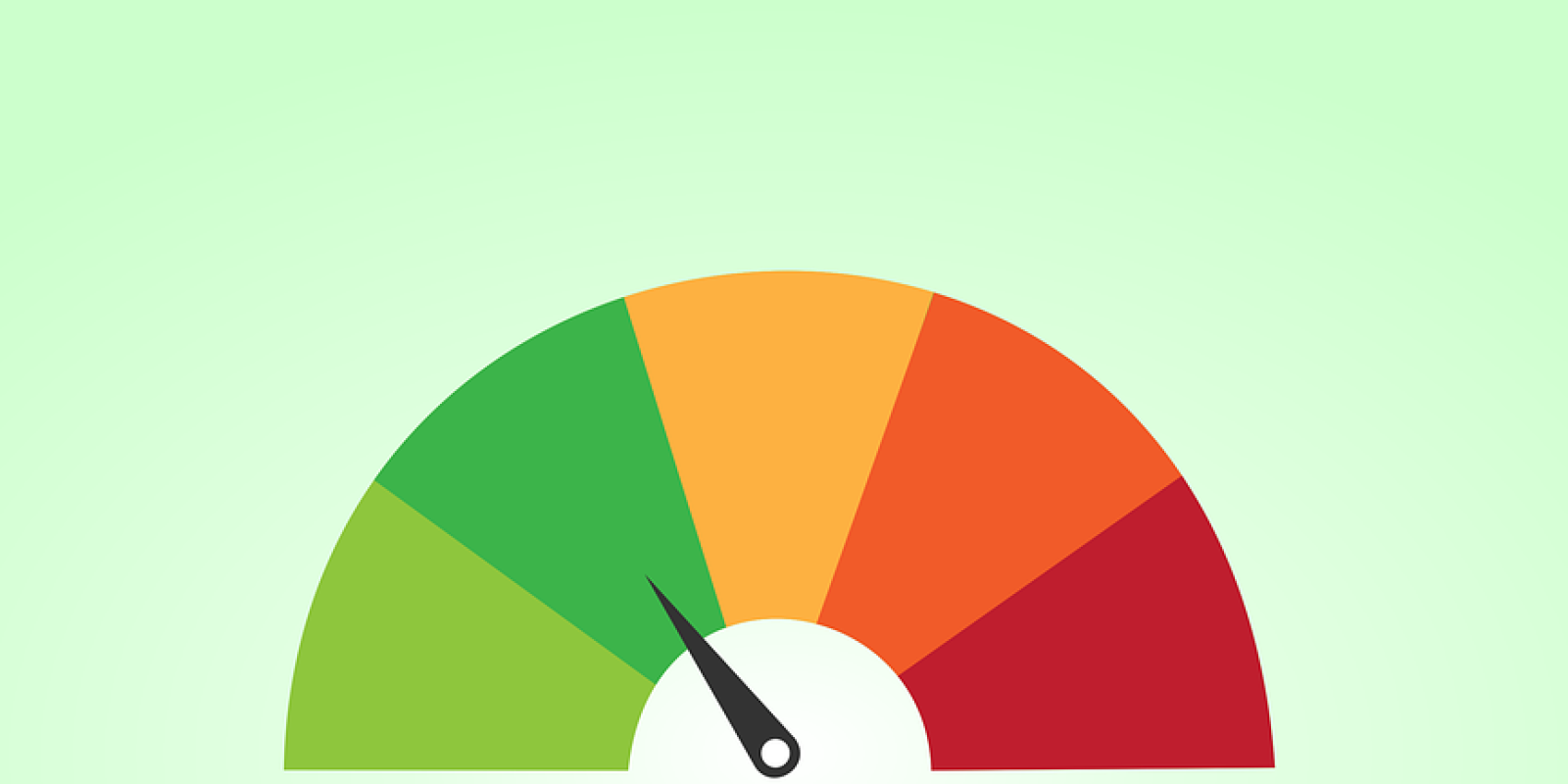
- 0-20 points → cold lead
- 21-50 points → lukewarm lead
- 51+ points → hot lead
How to use scoring for operational actions
Lead scoring makes sense only when linked to concrete actions.
Cold leads:
- automatic nurturing flows
- educational and informational content
- no immediate direct contact.
Tepid leads:
- more specific content
- invitations to events or insights
- First requests for interaction.
Hot leads:
- direct contact (call, personalized email)
- sending complete documentation
- one-to-one management.
CRM software for crowdfunding: concrete tools and how to use them
CRM all-in-one
All-in-one CRMs are comprehensive platforms that integrate contact management, pipeline, automation, and reporting into a single environment.
In a tool like HubSpot you can:
- create the pipeline
- Define the stages (lead, qualified, potential investor, etc.).
- Move contacts between phases based on actions
- set lead scoring
- Award automatic points based on actions (email, click, form)
- Create thresholds to identify hot leads
- activate automations
- sending automated emails
- Internal notifications when a lead exceeds a threshold
- monitor performance
- number of leads per phase
- conversions
- more effective channels.
Tools such as Salesforce offer even more advanced functionality, but require more complex configurations.
In general, all-in-one CRMs are more expensive and require specific learning than other solutions, but they offer the advantage of being able to manage everything from one place.
CRM + marketing automation
An alternative is to combine CRM and marketing automation while maintaining greater flexibility.
Tools such as Mautic or ActiveCampaign are particularly well suited for managing lead nurturing:
- segmenting contacts
- Dynamic lists based on behavior and data
- Segments (cold, lukewarm, hot) updated automatically
- build email streams
- automated follow-up sequences
- Different content based on the lead's actions
- tracking behavior
- email opening
- click
- visits to specific pages
- integrate with CRM
- data synchronization
- Automatic lead status update.
This approach often keeps costs down and is consistent with the processes of crowdfunding marketing, where contact and interaction management and nurturing are the core of the strategy.
However, it requires integration among multiple tools and does not provide a single overview of the data at hand.
In practice, one rarely uses a single tool. More often, one builds one integrated software stack covering all processes-this is a specialty that makes Turbo Crowd's consulting unique.
We conclude by emphasizing that. CRM is not a useful tool only during the crowdfunding campaign, but a strategic asset to fuel other marketing and business activities through the contacts collected.
Do you need support in preparing a successful crowdfunding campaign and seeking potential investors for your project?
Turbo Crowd can accompany you throughout the process, from organizing the precrowd to closing the collection, developing effective and innovative marketing strategies to best promote your campaign.