
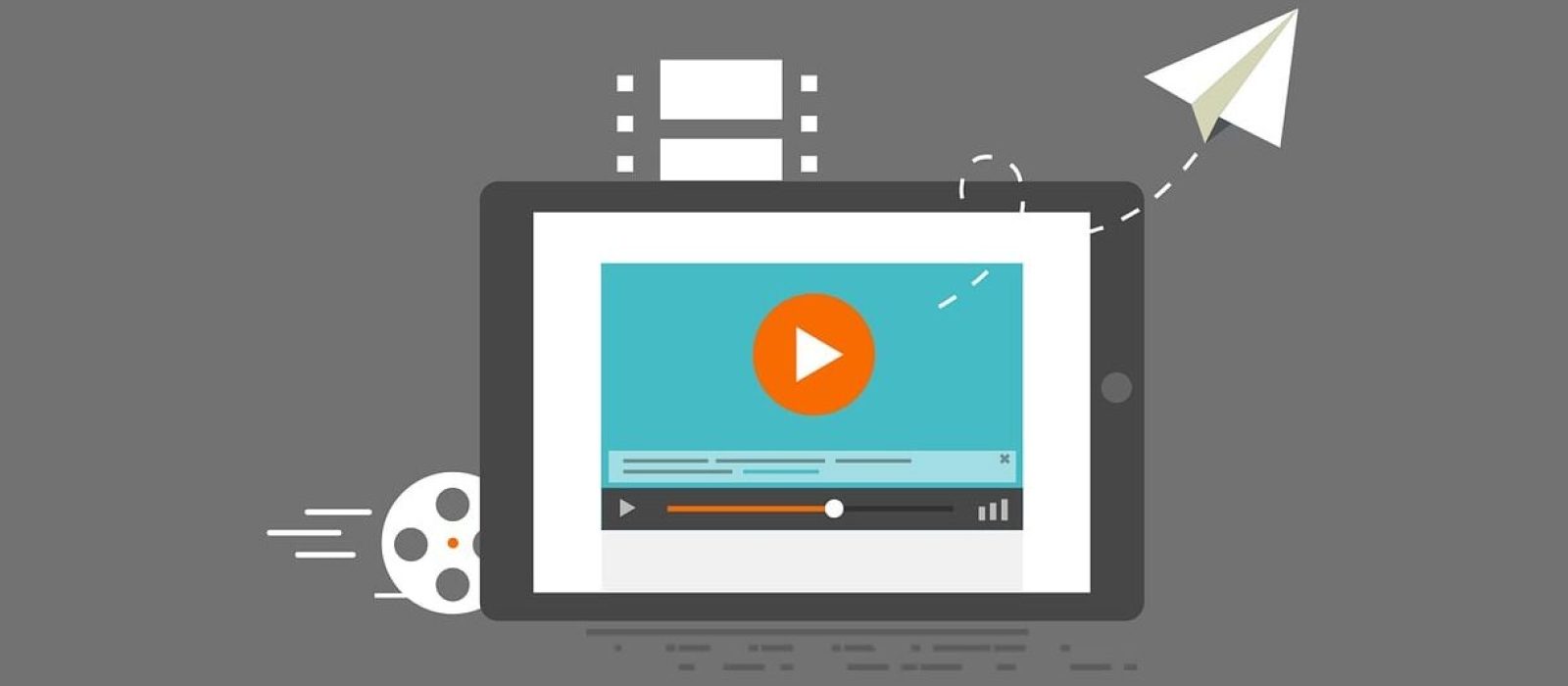
- What Is a Webinar and Why Is It a Marketing Tool?
- What is a webinar used for?
- How to Use Webinars to Qualify Leads
- How to Increase Conversions with a Webinar
- Crowdfunding Webinar: Inform, Build Trust, and Gather Expressions of Interest
- Want to learn more directly with our crowdfunding experts about the topic you are reading about?
- Do you need support in preparing a successful crowdfunding campaign and seeking potential investors for your project?
A webinar At first glance, it may seem like a simple online presentation. In reality, when it’s well-designed, it’s much more than that: it’s a marketing tool which allows a company to inform its audience, collect contact information, identify who is truly interested, and guide them toward the next step.
This is especially true when the purchase isn’t immediate, the product or service requires explanation, and the target audience needs to build trust before taking concrete action. In these cases, a webinar allows you to do something that many forms of digital content only partially achieve: create a direct relationship.
Webinar participants invest their time, pay attention, listen, ask questions, respond to surveys, click on links, and download materials. All of these actions provide useful information for distinguishing between a curious contact and a qualified lead, or between a passive participant and someone ready to speak with the sales team.
In this article, we'll give you a quick A Guide to Turning Your Webinar from Simple Content into a Strategic Asset to build trust, engage the audience, and increase conversions.
What Is a Webinar and Why Is It a Marketing Tool?
A webinar is a online event, live or recorded, designed to share content with a remote audience. The term is a combination of “web” and “seminar,” but today its use extends far beyond the traditional training seminar.
A webinar can be used to explain a topic, present a method, showcase a product, answer frequently asked questions, provide an in-depth look at a new regulation, discuss a real-life case, or create an opportunity for dialogue with customers and prospects.
From a marketing perspective, its value lies in the combination of three elements:
- useful content;
- direct interaction;
- collection of data on user behavior.
These three aspects set it apart from many other digital communication tools. An article can be read on its own; a newsletter can be opened or ignored; a video can be watched distractedly. A webinar, on the other hand, requires more explicit engagement from the audience: signing up, choosing to participate, staying connected, and interacting.
Definition of a webinar
A webinar is a structured online meeting, organized by one or more people, during which content is shared with a registered or invited audience.
It can take place live, allowing participants to ask questions and interact, or it can be recorded and made available on demand. The two formats are not mutually exclusive: often, the live event is recorded and later reused as content for those who were unable to attend.
There are several types of webinars:
- training webinar, designed to explain a topic and raise public awareness;
- demonstration webinar, useful for demonstrating how a product, software, or service works;
- sales webinar, designed to present a solution and guide the audience toward a call to action, a demo, or a request for a quote;
- Q&A Webinar, structured around the participants' questions;
- online roundtable discussion, with multiple speakers discussing a topic from different perspectives;
- refresher webinar, used to communicate news, results, changes, or developments regarding a project.
The format may be similar, but the strategy varies greatly depending on the objective. A company may organize a webinar to awareness, to gather contacts, to to educate the market, to prepare a sale, for Reactivate a database or to strengthen relationships with existing customers.
Webinars are effective for all these purposes because they combine information with a personal touch. This aspect is especially important in industries where trust is crucial. Think of B2B services, consulting, finance, technology, training, and complex products.
For this to work, however, it is essential that the content not be structured as a mere sales pitch. A webinar that is too self-referential tends to lose the audience’s attention quickly. A helpful webinar, on the other hand, starts with a genuine question from the audience and offers tools to help them navigate the content more effectively. There may be a commercial offer, but it must come at the right time and be consistent with the content.
Why a webinar is different from an article, a newsletter, or a video
Webinars are a type of digital content, but they have their own unique characteristics.
Compared to an article, it allows for a a more direct relationship: Like the article, it provides information, but it also gives insight into tone of voice, rhythm, facial expressions, and dialogue.
Compared to a newsletter, it requires stronger action. Opening an email is a weak indicator; signing up for a webinar and participating, on the other hand, indicates a more concrete interest.
Compared to a recorded video, it offers interaction. During a live webinar, you can ask questions, conduct polls, solicit feedback, encourage participants to click on a call to action, and gather questions that can be turned into future content.
This interaction is valuable because it helps the company better understand its audience. Not all registrants have the same commercial value. Some register out of curiosity; others participate because they have an urgent problem; some stay until the end, while others do not; some ask a very specific question; and others click on the link to schedule a call.
The webinar allows you to identify these signals and use them to segmenting contacts: It is a data source.
Of course, this value only becomes apparent if the company has put the right tools in place: a clear landing page, a well-designed sign-up form, a suitable platform, a CRM, a system of marketing automation, a follow-up plan.
Without these elements, a webinar remains just an event. With these elements, it becomes a measurable marketing tool.
What is a webinar used for?
As we've already mentioned, a webinar can serve many different purposes. To be effective, it must be designed for a specific target audience and for the specific funnel stage where that target is located.
The webinar's structure, title, level of detail, call to action, and follow-up should vary depending on whether the goal is awareness, consideration, or conversion.
Let's look at some practical examples.
Lead generation
One of the most common uses of webinars is the lead generation, that is, the acquisition of leads who may be interested in the company, its product, or its service.
How does it work? The company offers a useful content and asks people to register via a form. In exchange for access to the webinar, users provide some information: name, email address, job title, company, industry, and any specific needs they may have.
This data is then entered into the company's database and can be used for subsequent email marketing, marketing automation, or sales outreach activities.
For this process to work, however, the webinar must be perceived as useful. The audience must immediately understand why they should devote time to that event. The more specific the content, the more likely it is to attract contacts that align with the target audience. The quality of a lead matters more than the volume.
A good webinar for lead generation It can promise, for example, to:
- explain a difficult process;
- help prevent common mistakes;
- to clarify a new regulatory provision;
- demonstrate a working method;
- compare different solutions;
- present a specific case;
- provide a checklist or a decision-making framework.
Educating the Public
Many products and services cannot be sold through a single, direct message because they require an explanation. This happens when the solution is technical, the cost is significant, or the audience needs a lot of information to make an assessment.
In these cases, the webinar has a educational function.
Educating the public does not mean giving an abstract lecture, but rather helping people better understand an issue related to the decision they will have to make.
A company can use a webinar to explain:
- what problems a solution addresses;
- what criteria to use when choosing a supplier;
- what mistakes to avoid before buying;
- What steps are required to implement a process;
- what results to realistically expect;
- What factors should you consider before making a decision?.
A well-structured webinar like this allows you to address many objections in advance. Participants can clarify their doubts, compare information, and reach a business contact with greater awareness. As a result, the sales team’s work also becomes more effective: they don’t have to start from scratch, but can engage with people who are already informed.
Strengthening Credibility and Trust
The webinar is also a positioning tool.
When a company organizes an online event on a topic relevant to its target audience, it takes a area of expertise: He is demonstrating the ability to tackle a topic, select the important information, and present it in a way that is easy to understand.
A well-prepared, clear, and open-minded speaker can help strengthen the public’s perception of the company. The same applies to the decision to involve founders, managers, technical leads, consultants, or external guests with recognized expertise.
From a content perspective, a webinar can also help reinforce the impression of experience and expertise that a company conveys online, because it generates reusable content: recordings, video clips, in-depth articles, FAQs, newsletters, social media posts, downloadable materials.
A single webinar can therefore feed into multiple channels and become part of a broader editorial strategy.
Accelerate the conversion
A webinar can also help drive conversions, provided that the call to action presented to the audience is consistent with the content and with the level of awareness of the participants. For example, after an educational webinar aimed at an audience still in the early stages of the buying process, it may be more effective to offer a guide for download or the option to sign up for a content series. After a webinar that’s closer to the purchase decision, on the other hand, it may make sense to offer a call or a demo.
La conversion, therefore, does not always result in an immediate sale. It can be:
- schedule a call;
- request a consultation;
- download a file;
- sign up for a priority list;
- request a demo;
- fill out a questionnaire;
- express interest;
- start a free trial;
- talk to a sales representative.
La call to action It must be clear, visible, and well-reasoned. By the end of the webinar, participants should know what action they can take, how to take it, and why that action is beneficial to them.
For which target audiences and businesses does the webinar work best?
Webinars are not suitable for every situation. They can be very effective when the audience needs to Information, Comparison, and Trust before taking action. It is less useful when the product is simple, the decision is impulsive, or the target audience is not willing to spend time on in-depth content.
In general, it is a tool that is better suited to marketing strategies where relationships are just as important as visibility.
It works very well in B2B, because decisions are often not made by a single person and are not based on a spur-of-the-moment impulse. A company evaluating software, consulting services, financial services, or a technology solution must understand the costs, benefits, timelines, risks, implementation methods, and impact on internal processes.
A webinar allows you to speak to multiple participants at the same time and explain your product or service more clearly, while directly addressing any questions without any sales pressure.
From a target audience perspective, the webinar is obviously not suitable for a completely unengaged audience: someone who is completely unaware of the topic would first need to be exposed to simpler content; they would be unlikely to sign up for an online event about a product or service they know nothing about. The audience must be lukewarm or hot.
The webinar, however, is not only a lead-generation tool, but also a nurturing and retention, which helps maximize the value of the company’s existing audience: customers, former customers, prospects, dormant contacts, newsletter subscribers, social media followers, and participants in past events. The company’s database should not be treated as a static archive: it is a resource that needs to be reactivated with relevant content.
A webinar can be used to:
- draw attention to a competitive advantage;
- present a new offer to contacts who are already in the target audience;
- keep customers and prospects informed about a new development;
- create an opportunity for dialogue with the community;
- segment contacts that had previously been low-quality;
- resume stalled business negotiations;
- Encourage upselling and cross-selling.
Please note: Regardless of the purpose of a webinar, achieving that purpose requires taking appropriate follow-up. If nothing happens after the webinar, much of its value is lost. Participants must receive a consistent follow-up: materials, a recording, additional insights, an invitation to a call, an offer for a demo, or another useful next step. Non-participants, on the other hand, can be reached with a recording or a summary of the content.
Want to learn more directly with our crowdfunding experts about the topic you are reading about?
Turbo Crowd can reveal to you all the tricks of the crowdfunding trade, explain the capital-raising opportunities available to you, and provide you with practical support to carry out a successful crowdfunding campaign.
How to Use Webinars to Qualify Leads
Lead qualification is the process that allows you to identify the most promising leads from those who are still undecided. In the case of webinars, this qualification can take place at three different stages: before the event, during the event, and after the event.
First: the registration form
The choice of fields depends on the webinar’s objective. For a very introductory event aimed at raising awareness, asking for just a few pieces of information (name, email) may be sufficient. For a webinar aimed at a more mature B2B audience, however, it may be helpful to collect a few more details, such as job title, industry, and challenge.
During: interactions
During the webinar, participants provide very helpful feedback.
Some are simple behavioral datao: who joined the live stream, how long they stayed connected, whether they watched until the end, and whether they clicked on a link or downloaded any materials.
Other signs are more qualitative: questions in the chat, responses to polls, requests for further information, comments, and participation in the Q&A session.
Taken together, this information helps distinguish the truly interested leads—the “hottest” ones—from those who are simply curious.
To gather useful information, you can include a few moments of interaction. Surveys, for example, help us understand the public’s level of awareness, the issue that concerns them most, or the stage of the decision-making process participants are in.
Even the final questions They're invaluable. If multiple people ask for clarification on the same point, it means that topic could become the subject of future content: an article, a newsletter, an email series, a new webinar, or an FAQ page.
The webinar, therefore, helps identify not only leads but also market needs.
Next: Lead Scoring and Segmentation
The phase following the webinar is when the data collected is put into action.
The first step is to segmenting contacts based on their behavior. This work can be supported by the lead scoring, that is, by assigning a score to contacts based on their characteristics and behaviors.
Each group should correspond to a different follow-up.
For example:
- Those who were unable to attend can receive the recording and a summary of the main points.
- Participants who attended but did not interact may receive additional information.
- Those who have asked questions can receive a more personalized response.
- People who clicked on the call to action can be placed in a funnel that leads closer to conversion.
- Anyone who has requested a call must be handled promptly by the sales team.
How to Increase Conversions with a Webinar
From a conversion perspective, a webinar is a step in the funnel—not a standalone event or the end goal.
In fact, conversion does not automatically result from participating in the event: it depends on the journey that leads a person to sign up, engage with the content, recognize the value of the offer, and take the action the company desires.
You need a a specific and practical topic for the webinar, a clear landing page, a consistent promotion, a well-crafted call to action and a timely follow-up.
The landing page is where a person decides whether or not to register for the online event. It must therefore quickly answer one question: Why should I participate? It’s not enough to simply say what the webinar will cover: you need to make it clear what concrete benefit participants will gain. Avoid sensationalism and false promises.
The agenda is also important because it reduces uncertainty. People are more likely to sign up if they know what topics will be covered and if they recognize issues that relate to their own situation.
It's helpful to set aside times when anticipate the CTA during the webinar, without interrupting the flow of the content.
Finally, the follow-up is the phase in which the webinar generates most of its commercial value. As we’ve already suggested for lead generation, when it comes to conversion goals, it’s also advisable to plan different follow-ups for different segments of the webinar audience, depending on their behavior.
La timeliness It's important. If someone has just attended a webinar and shown interest, the best time to follow up is right after. Letting too much time pass reduces their attention span and makes conversion more difficult.
The follow-up should reflect the content of the webinar and not come across as a generic message. Referring to the topic discussed, the questions that came up, or the materials promised makes the communication more coherent and useful.
Crowdfunding Webinar: Inform, Build Trust, and Gather Expressions of Interest
A crowdfunding campaign It's not a traditional sale. Participants aren’t just buying a product or booking a service: in the case of equity crowdfunding, they’re investing in a company; in lending crowdfunding, they’re lending capital; and in reward crowdfunding, they’re supporting a project before it’s completed or released to the market.
People need to understand who is behind the project, what problem the company is solving, how the campaign works, what the terms are, what benefits they receive, and what risks they need to consider. Keep in mind that even today, most people don’t know what crowdfunding is or how it really works.
A webinar allows you to bring all these elements together in a structured and interactive setting.
The time when a webinar can be most useful is precrowd, that is, the phase leading up to the campaign’s official launch. It can help explain the project before the launch, illustrate how crowdfunding works, introduce the team, give a preview of the rewards, address common questions, and identify which contacts are most engaged—all to build that crucial preliminary community needed for a successful campaign launch.
But it's also possible to organize multiple webinars, offering “stages” in a in-depth exploration of the project, both during the pre-crowdfunding phase and during the campaign.
During the precrowd phase, the CTA will be the "Express Interest" button on the landing page; during the campaign, it will be the "Invest" button.
As with any other goal, follow-up is essential for turning webinar participants into investors. In crowdfunding, this is particularly important because the decision to participate in a campaign can be a slow and complex process involving multiple steps.
Let’s wrap up with a point that applies to any way you might want to use a webinar as a marketing tool: a webinar won’t work if the right audience is not achieved. The promotion must be planned carefully, choosing channels based on the target audience(s) and starting well in advance to give people time to make arrangements and to send out multiple reminders about the event, reaching as many people as possible.
Do you need support in preparing a successful crowdfunding campaign and seeking potential investors for your project?
Turbo Crowd can accompany you throughout the process, from organizing the precrowd to closing the collection, developing effective and innovative marketing strategies to best promote your campaign.
























 Italiano
  English
  Français
  Nederlands